You have just finished your roasted turkey sandwich for lunch. Feeling quite parched as you walk to class, you unscrew the cap of your bottle of lemon tea and take a large gulp. In this moment of thirst-quenching joy, you let out an “ahh” and forget the fact that you had just consumed an extra 500 microplastics by simply twisting the cap (Culpepper, 2023).
By definition, microplastics are plastic particles less than 5 millimeters linked together by polymer chains of hydrogen and carbon atoms (Rogers, 2019). They are the byproducts of larger plastic objects like bottles and packaging that permeate the biosphere and our bodies. For example, by just spending a day at home, an adult can inhale some 68,000 microplastic particles from the air alone (LaMotte, 2025).
This statistic makes it clear that it’s impossible to avoid them. As a result, they make their way into our organs, infiltrate our lungs, kidneys, bloodstream, livers, and even appear in the first stools of our infants (Dutchen, 2023). This sea of microplastics within our bodies is problematic for two reasons: one, the chemicals within microplastics like bisphenol A and phthalates hamper our endocrine, reproductive, and nervous systems (Isenaj, 2023); and two, they are entering our cells.
Firstly, bisphenol A and phthalates are notoriously known to be endocrine disrupters, chemicals that mimic and interfere with hormones that are part of the endocrine system. By these compounds fiddling with hormone receptors, our fragile balance of hormones is brought to instability, and a disruption in our bodily systems is felt (Ohore, 2019). Type II diabetes, a higher risk of thyroid cancer, affected estrogen and androgen responses, and impeded neurodevelopment are all significant concerns, especially for children (Wang & Qian, 2021).
However, the second problem of microplastics entering human cells is more alarming to scientists. In a study using a model of human intestinal lining at Harvard’s T.H. Chan School of Public Health, nanoplastics, microplastics smaller than 1 micrometer in size, were found to enter cellular nuclei (Dutchen, 2023). In addition to endocrine system disruption gifted generously by bisphenol A and phthalates, microplastics themselves have the ability to induce oxidative stress and DNA damage inside the cell. Plastics like polypropylene, commonly found in takeout containers with a three-arrow triangle circling “PP”, can even upregulate the gene expression of several genes associated with cancer metastasis (Goswami et al., 2024). 
The overexpression of one of these genes like TMBIM6 substantially stimulates cell invasion and migration through initiating a major cell signaling cascade called MAPK/ERK. Enhanced activation of this signaling pathway is almost like gasoline for breast cancer progression and spread (Shin et al., 2023).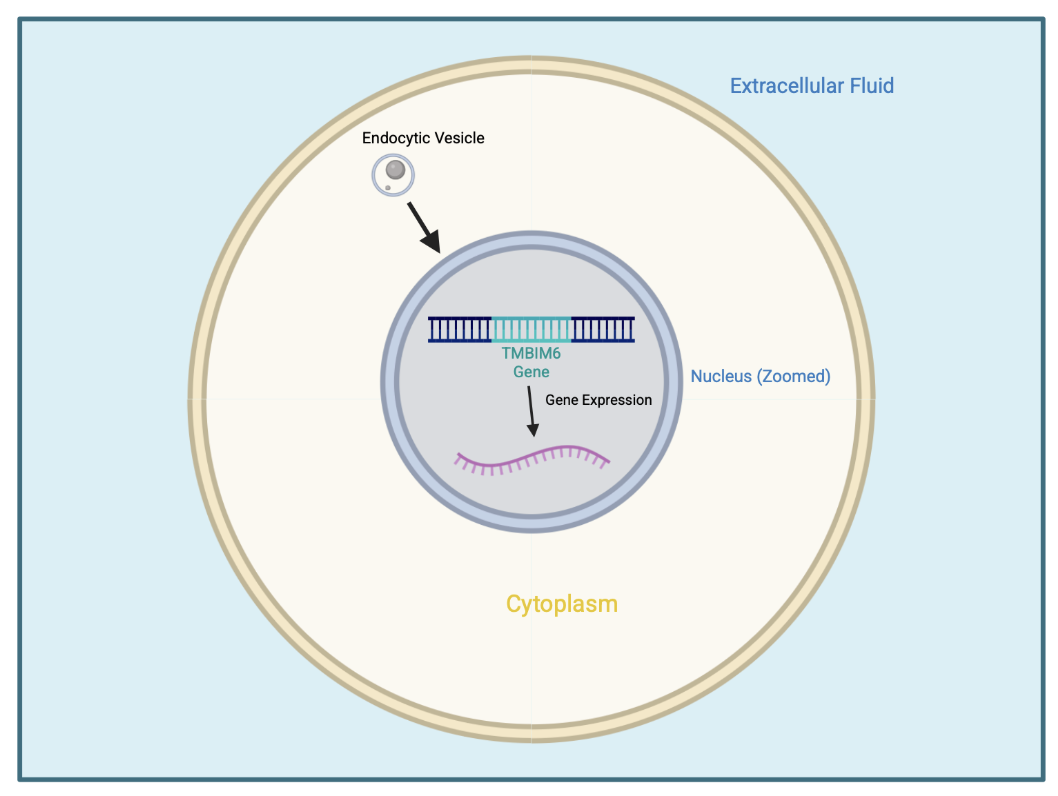
So, what’s the solution? While there isn’t a national piece of legislation regulating microplastics, California and Illinois have passed laws that restrict a type of microplastic called microbeads in cosmetic products (Shen, 2023). Until broader legislation is passed, scientists are constantly trying to seek solutions to mitigate these numerous health concerns. Researchers at Duke University have been studying a bacteria called Thermus thermophilus that can break down plastics under high heat (Miller & Hartsoe, 2025). Additionally at Princeton University, egg whites are cleverly being frozen and heated to create structures of graphene sheets capable of filtering microplastics from seawater (Schwarz, 2022). In terms of yourself, you can cleanse your microplastic-ridden body most by ghosting your precious plastic bottle of lemon tea, reheating your macaroni in non-plastic containers, and opting for clothes made from natural materials like cotton or linen (sorry Lululemon). Additionally, you have the ability to bring greater awareness to this issue through advocacy. In New York City, there are numerous local initiatives to get involved with like Hudson River Park Over Plastic and the Brooklyn chapter of Beyond Plastics. The goal is to ultimately propel legislators and the FDA to take action to preserve the health of us now and in the future.
References
Culpepper, J. (2023, October 3). What’s in your water bottle? Concerns about microplastics in caps | Environmental Working Group. Www.ewg.org. https://www.ewg.org/news-insights/news/2023/10/whats-your-water-bottle-concerns-about-microplastics-caps
Dutchen, S. (2023). Microplastics everywhere. Harvard Medicine; Harvard Medicine. https://magazine.hms.harvard.edu/articles/microplastics-everywhere
Goswami, S., Satadal Adhikary, Bhattacharya, S., Agarwal, R., Ganguly, A., Nanda, S., & Prem Rajak. (2024). The alarming link between environmental microplastics and health hazards with special emphasis on cancer. Life Sciences, 355, 122937–122937. https://doi.org/10.1016/j.lfs.2024.122937
LaMotte, S. (2025, July 30). Indoor air contains thousands of microplastics small enough to penetrate deep into our lungs, study finds. CNN. https://www.cnn.com/2025/07/30/health/airborne-microplastics-study-wellness
Miller, S., & Hartsoe, S. (2025, June 18). Microplastics Are Everywhere. Here’s What Duke Research Is Doing About Health Concerns | Duke Today. (2025). Duke Today. https://today.duke.edu/2025/06/microplastics-are-everywhere-heres-what-duke-research-doing-about-health-concerns
Ohore, O. E., & Zhang, S. (2019). Endocrine disrupting effects of bisphenol A exposure and recent advances on its removal by water treatment systems. A review. Scientific African, 5, e00135. https://doi.org/10.1016/j.sciaf.2019.e00135
Rogers, K. (2019). Microplastics. In Encyclopædia Britannica. https://www.britannica.com/technology/microplastic
Schwarz, J. (2022, November 3). Princeton Engineering - Researchers cook up a new way to remove microplastics from water. Princeton Engineering. https://engineering.princeton.edu/news/2022/11/03/researchers-cook-new-way-remove-microplastics-water
Shabani Isenaj, Z. (2023, June 5). Microplastics on Human Health: How Much Do They Harm us? | United Nations Development Programme. United Nations Development Programme. https://www.undp.org/kosovo/blog/microplastics-human-health-how-much-do-they-harm-us
Shen, Y. (2023, November 30). Microplastic Regulations in the United States: An Overview. Compliance Gate. https://www.compliancegate.com/microplastic-regulations-united-states/
Shin, Y., Choi, H. Y., Kwak, Y., Yang, G.-M., Jeong, Y., Jeon, T.-I., Seok, J., Lee, E.-R., Kim, J.-H., Jeon, K., Dayem, A. A., Lim, K. M., & Cho, S.-G. (2023). TMBIM6-mediated miR-181a expression regulates breast cancer cell migration and invasion via the MAPK/ERK signaling pathway. Journal of Cancer, 14(4), 554–572. https://doi.org/10.7150/jca.81600
Wang, Y., & Qian, H. (2021). Phthalates and Their Impacts on Human Health. Healthcare, 9(5), 603. National Library of Medicine. https://doi.org/10.3390/healthcare9050603