An Ethical Consideration of Medical Drones in Wartime
Article Sidebar
Main Article Content
Abstract
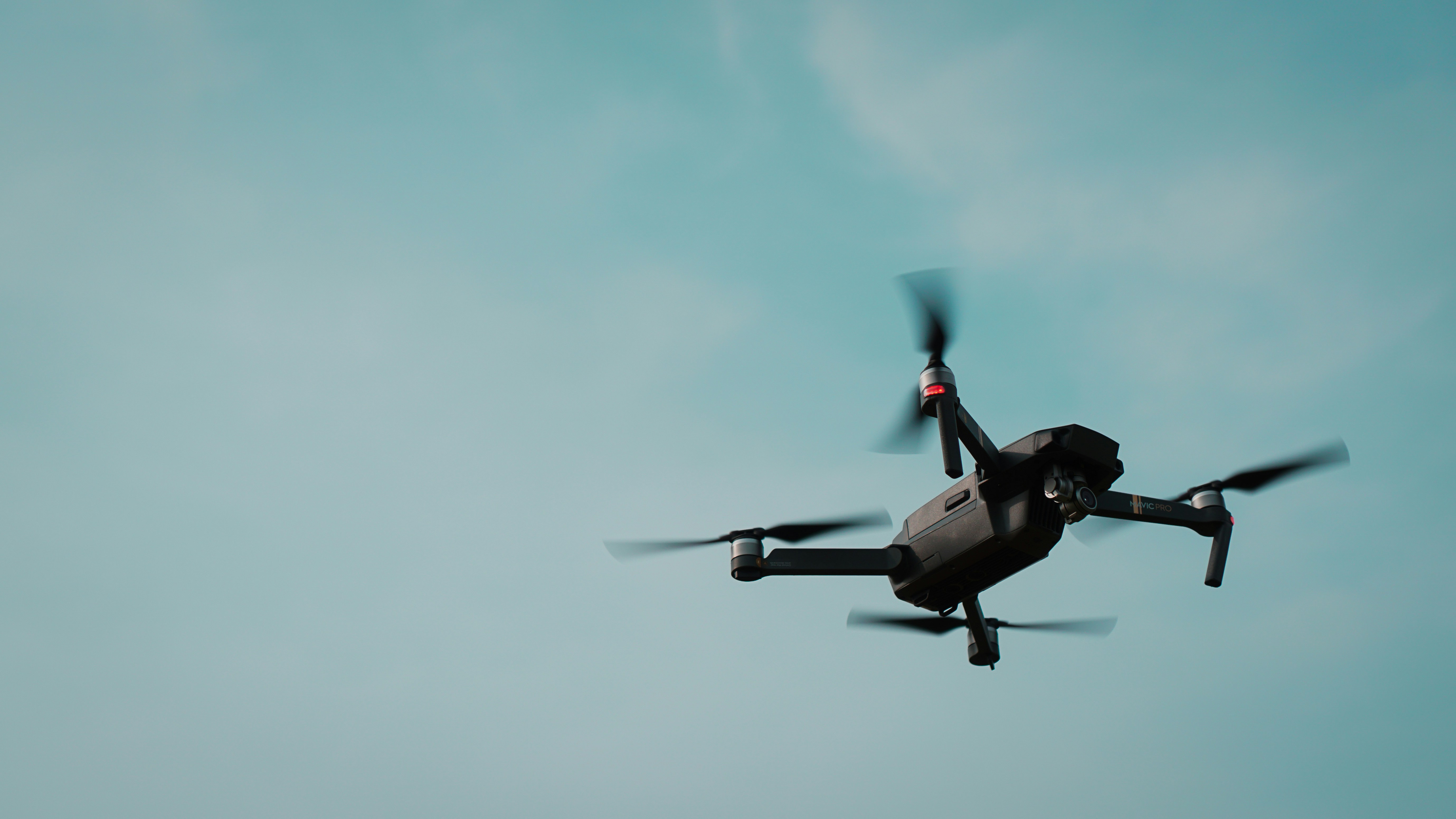
Photo by Fikri Rasyid on Unsplash
Abstract
While nations race to expand the capabilities of drone technology, there is a need to consider how this technology is reshaping our ethical obligations. The prevailing ethical-legal framework that informs international wartime bioethics is the Geneva Conventions, but at the time they were concluded, they could not have anticipated how medical drones would affect the treatment of the wounded. This essay argues that medical drone technologies demand fresh consideration of moral duties and proposes solutions to prospective moral issues within the framework of the Geneva Conventions.
Introduction
The civilian and military sectors are increasingly using drones. The Russia-Ukraine war has demonstrated the indispensability of drones on the contemporary battlefield. Innovators, engineers, and strategists are developing and evaluating drone technology while considering cost and function. As seems to be the case for many innovations, thoughtful ethical consideration tends to lag. This paper aims to raise awareness of the ethical considerations surrounding drone technology in modern conflict, asking which moral duties rightly accompany this extraordinary technology. Rather than attempt to establish a universally agreed-upon ethic, analysis of whether the Geneva Conventions (to which the US and 195 other nations are signatories) require the use of medical drones to support wounded opposition personnel, and, if so, to what extent. This paper argues that, to meet the requirements of the Geneva Conventions, militaries must use their best efforts to adhere to the duty to rescue wounded enemies. When drone use is exclusively medical, and a drone is so marked, drones and their operators should be afforded special protection.
Duty to Rescue Enemy Wounded
The word choice of Articles 12 and 15 on the treatment of wounded Armed Forces is undeniably strong. Article 12 states, “… they shall not willfully be left without medical assistance and care,…”.[1] In the same chapter, we find, “At all times… Parties to the conflict shall, without delay, take all possible measures to search for and collect the wounded and sick…”[2] These statements leave little room to debate the obligation of Parties to the conflict to assist the wounded on the battlefield. An ethics textbook used by the US military says, “…military physicians cannot, as members of the armed forces, live up to the expectations and responsibilities of the Geneva Conventions.”[3] While it may be difficult, I argue that military ethics should call for rescuing enemy wounded in accordance with the Geneva Conventions, with reasonable exceptions based on risk to the rescuers. Traditionally, the Geneva Conventions impose a reasonable duty to act in good faith, based on a reasonable commander standard.
The US military follows a hybrid ethical system with duty-bound deontological and consequentialist elements. Even if there is a duty to attend to the wounded opposing forces “without delay” in accordance with the Geneva Conventions, rescuers may justify noncompliance with this moral burden by arguing that there is an unacceptable risk of harm to themselves, which would impair the unit’s ability to care for current and future casualties – an unacceptable outcome. Applying utilitarianism, military officers may conclude that saving the life of one wounded enemy is not worth risking the lives of four of our friendly forces. Hypothetically, suppose those friendly forces are dispatched anyway, and they become casualties. This development would further expand both the moral responsibility and risk of medical planners. The neglect of the duty to assist enemy wounded, for the regard and safety of our personnel and resources, is a well-discussed ethical dilemma and appears to be an accepted normative practice that contradicts the Geneva Conventions. This invokes a threshold deontology, in which the duty to rescue enemy wounded is binding when circumstances permit but may be overridden when circumstances involve unacceptable risk.
Emerging drone medical technologies change the risk calculus. A team of stretcher-bearers is no longer necessary to evacuate a non-ambulatory casualty. In Ukraine, ground drones have been used to traverse disputed battlefields to identify friendly wounded forces and evacuate them to safety. Germany has been developing an unmanned aerial vehicle called “Grille” which is intended to transport casualties by air.[4] These technologies challenge the established norm that allows consideration of the risk to rescuers. One may conclude that with emerging drone medical technologies, parties to the conflict now risk only non-human resources (and, arguably, some degree of operational security due to observable drone movements).[5] Rather than evaluating whether one opposition casualty is worth the lives of four friendly medics, the question becomes whether one opposition wounded person is worth $35,000 in equipment and a small operational security risk.[6] Considering emerging medical drone technologies, I propose that the Geneva Conventions compel strategic medical planners to ask themselves whether and how moral obligations should shift due to the possibility of using drones rather than soldiers.
Protections of Drones
Chapter III of the Geneva Conventions mainly concerns the protections granted to medical persons, buildings, materials, and vehicles involved with the evacuation and care of wounded individuals. It is silent as to what protections might apply to drones. Like persons, they perform actions and are unlike inanimate material or a conventional vehicle without an internal operator. But they are unlike persons in that a drone possesses no “will” and is compelled only by a distant operator. Furthermore, persons have a claim to dignity, and arguably, the Geneva Conventions obligate military actors to respect human dignity. It would seem inappropriate to grant that dignity to a drone.
Instead, drones may be more like medical material or vehicles in Articles 33, 35, and 36. In either case, the designation of these drones as specifically and exclusively as medical equipment appears to be essential for protection under the Geneva Conventions. Drones are highly versatile tools. For example, a drone can drop a medical aid kit or a grenade. Even a medical drone operated under the most peaceful intentions collects reconnaissance on the battlefield in which it is operating. Medical drones that enjoy protection as medical equipment must be specifically marked as such and have their capabilities limited to the sole purpose of aid and rescue, or else abandon their protections and risk rightful destruction as tactical assets on the battlefield.
Drones are responsible for between 70 and 80 percent of those injured on both sides of the war in Ukraine.[7] This makes drone operators the deadliest individual agents of this contemporary conflict. Both Russia and Ukraine are seeking skilled drone operators. Furthermore, it is in the interest of both sides to capture or neutralize drone operators. Under Article 25 of the Geneva Conventions, “auxiliary personnel” such as stretcher-bearers are afforded “respect and protection” if they come into contact with the enemy or fall into enemy hands at the time that they are carrying out their duties. A medical drone operator searching for or carrying wounded out of the battlefield may be like a stretcher bearer, unlike drone operators performing military tactical operations. For drone operators performing both medical and tactical roles, it is less clear whether it is ethical or practical to afford them the same protections as a field medic or orderly in a field hospital.
Ethical and Legal Issues
Military strategic and medical planners should be proactive rather than reactive to the ethical challenges posed by emerging medical drone technologies. Under the current ethical framework of the Geneva Conventions, Parties to a conflict have a duty to provide for enemies wounded on the battlefield. With new technologies, this duty may be performed with minimal or no risk to military personnel.[8] How to characterize drone operators performing both medical and military tactical operations is an open issue.
On Articles 12 and 15 – A Duty to Aid
The first Geneva Convention in 1864, and even the Fourth Geneva Convention in 1949, did not anticipate that battlefield wounded could be cared for and recovered without risking friendly personnel. However, the Conventions most likely anticipated that recovery of enemy wounded required a significant resource expenditure and did not consider resource expenditure a cause for exception to the moral duty. But resources are not infinite. Some may argue that it is neither reasonable nor practical to expect a Party to expend great resources to a cause that does not directly advance its military and political goals amidst the conflict. If we accept the resource expenditure, planners and political bodies must budget accordingly. Advanced consideration of anticipated risk to equipment would help Parties prepare for fulfilling the ethical duty under the Conventions.
On Protection Conferred to Drones under the Geneva Conventions
As with many historical technological innovations that have had non-military use (metallurgy, gunpowder, aviation), war has expedited drone development.[9] In the Russia-Ukraine war, drones observe from above to coordinate ground forces or weaponry and drones can carry deadly payloads to harm opposition personnel or equipment. If medical drones are to enjoy protection, there must be a clear distinction between medical drones and non-medical drones. Chapter VII of the Geneva Conventions discusses the use of the distinctive emblem (red cross, red crescent, red lion and sun, etc.) on “all equipment employed in the Medical Service.”[10] At a minimum, medical drones should conform to this standard and bear the distinctive emblem. But displaying an emblem does not limit medical drones’ capabilities. Infrared optics, audio recording, and pyrotechnics could serve multiple functions. While innovators continue to push the functional capabilities of drones, I propose we question which capabilities medical drones may possess if they wish to be treated as exclusively medical under the Geneva Conventions or pertinent international law.
On Treatment of Medical Drone Operators and Medical Drone Units
Notably, the skillset that makes a sniper a lethal agent in an armed conflict differs significantly from that which makes a medic an effective stretcher-bearer. And yet, the skillset that makes an explosive drone-operator an effective lethal agent (namely, control and navigation of their drone) is not markedly different from the skillset of an effective medical drone operator. In the Russia-Ukraine war, opposing forces target drone operators. There are accusations of prisoner mistreatment, which might be seen as punitive toward drone operators due to their occupation as particularly lethal agents.[11] Persons dedicating their skills to the rescue and treatment of friendly and opposing casualties should not be subject to the same hostility. Yet, it is arguable that highly lethal drone operators should not have the same protections as dedicated medical personnel merely because the drone is being used for a medical purpose at the time of capture. I propose that medical units should possess dedicated medical drone operators – operators who are not responsible for any destructive or reconnaissance activities. I propose that these medical units, their operators, and the specifically designed and designated medical drones should enjoy the protections conferred by the Geneva Conventions. One counterargument is that the overlapping roles are efficient. I suggest that efficiency should be accompanied by a lack of special protection.
Conclusions
Medical drones are already part of the battlefield and will continue to have a greater role in modern conflicts. Yet ethical considerations are developing alongside these emerging technologies. We may apply existing legal-ethical frameworks, such as the Geneva Conventions, or develop mutually agreed-upon laws and guidelines so that these technologies may be used ethically and reduce suffering. I argue that a proactive approach is required of our strategic and medical planners. If we accept our duty to care for wounded enemies on the battlefield, then we must prepare for that duty by securing the resources and budgets needed to address this moral burden. If we prepare to use medical drones, we should do so ethically under protections outlined in mutually agreeable international law. Any nation ill-prepared for technological advances risks a fatal disadvantage. While we consider the functional ability of these technologies, we must anticipate the evolving ethical issues that accompany them.
-
[1] Geneva Convention (I) for the Amelioration of the Condition of the Wounded and Sick in Armed Forces in the Field, Aug. 12, 1949, 75 U.N.T.S. 31, art. 12.
Note: Readers will benefit from having the verbatim text of the Geneva Conventions available to them for reference while considering this essay. The text is available at: https://ihl-databases.icrc.org/en/ihl-treaties/geneva-conventions-1949additional-protocols-and-their-commentaries
[2] Geneva Convention I, art. 15.
[3] Victor W. Sidel and Barry S. Levy, “Physician-Soldier: A Moral Dilemma?” in Military Medical Ethics, vol. 1, ed. Michael L. Gross (Dordrecht: Springer, 2006), 303.
[4] Avilus GmbH, “Grille,” https://www.avilus.com/solution/grille
[5] However, drone operators are vulnerable due to the limited range of drones.
[6] Iliya Kesaiev, “Robot Helps Wounded Ukrainian Soldier Evacuate with Russian POW,” NV (English edition), February 13, 2026, https://english.nv.ua/nation/robot-delivers-aid-saving-both-ukrainian-soldier-and-russian-captive-50583544.html
The price for a ground drone used for medical transport of casualties being $33,500-$34,000
[7] Eva Hartog, “Latvian Report: Drones Are Mass Killers on the Ukraine Front,” Politico (European edition), January 26, 2026, https://www.politico.eu/article/latvian-report-drones-are-mass-killers-on-the-ukraine-front/
[8] Drone operators may face risks, partly depending on the range of the drone.
[9] DeVore, Marc R. 2023. “‘No End of a Lesson:’ Observations from the First High-Intensity Drone War.” Defense & Security Analysis 39 (2): 263–66. doi:10.1080/14751798.2023.2178571; CSIS. 2025. “The Russia-Ukraine Drone War: Innovation on the Frontlines and Beyond.” Csis.org. 2025. https://www.csis.org/analysis/russia-ukraine-drone-war-innovation-frontlines-and-beyond
[10] Geneva Convention I, art. 39.
[11] Anderson, Kenneth, and Matthew C. Waxman. “The Continuing Autonomous Arms Race.” Lieber Institute for Law and Warfare, United States Military Academy at West Point, April 20, 2022. https://lieber.westpoint.edu/continuing-autonomous-arms-race/
Article Details

This work is licensed under a Creative Commons Attribution 4.0 International License.