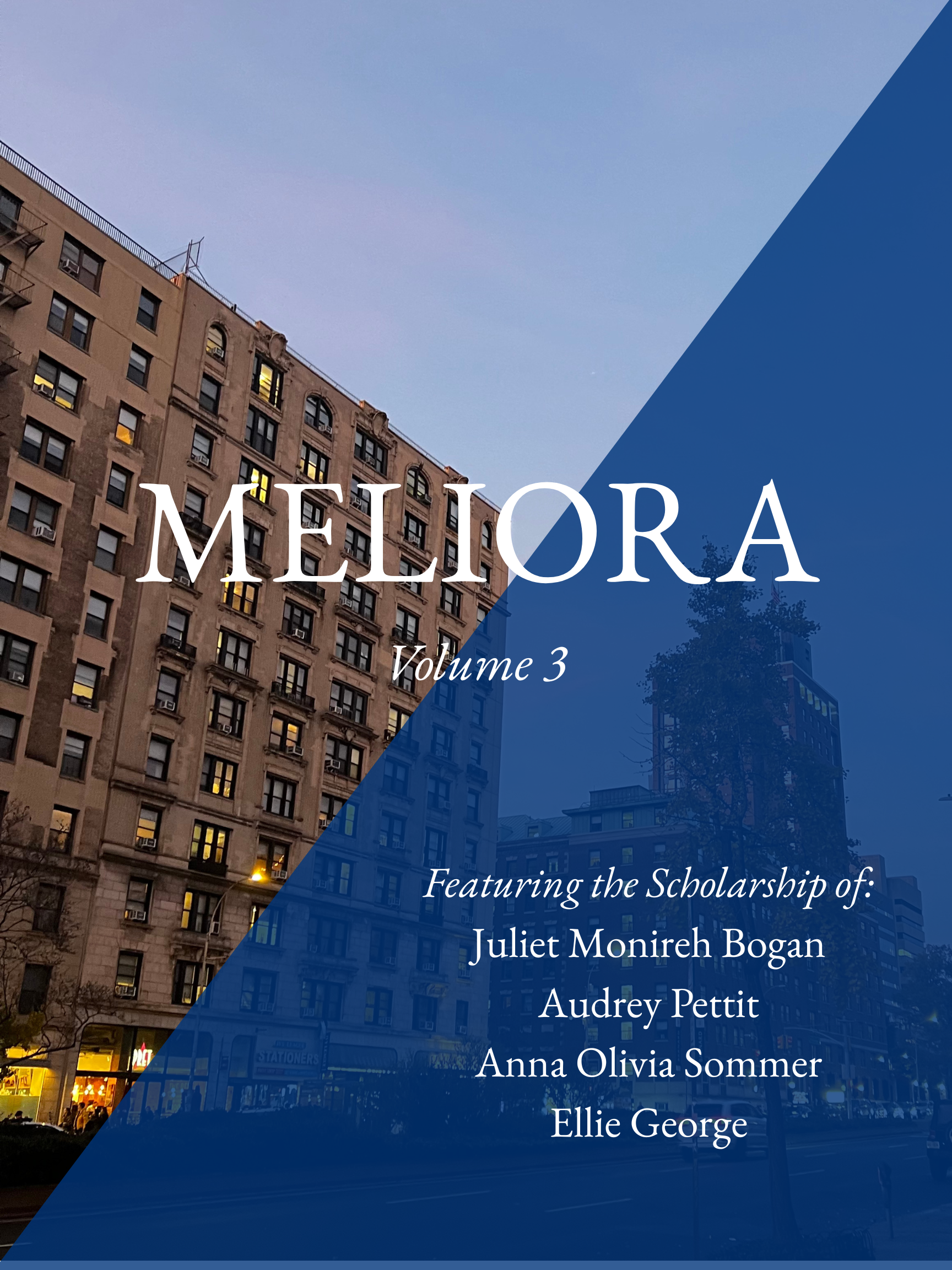
This issue of Meliora was published under the guidance of outgoing Editor-in-Chief Emma Kaneira with the support of faculty advisors Professor Atefeh Akbari and Professor Lisa Gordis as well as incoming Editors-in-Chief Eesha Rao and Isabel Pérez-Albuerne.
Contained within this issue are articles exploring lonliness and coming-of-age in Louisa May Alcott's Little Women, Walt Whitman's discussion of Black sufferage in his 1871 book Democratic Vistas, representations of gender and comedy in Norse Mythology, and topics of religion within Octavia Bulter's Parable of the Sower.
Meliora aims to transcend traditional academic boundaries, enabling the emergence of innovative research across diverse themes and eras. The journal offers a platform for budding scholars to explore lesser-known works and reinterpret established texts, encouraging them to question and redefine the literary canon—by uncovering fresh perspectives and deepening our understanding of its complexities, the journal fosters a rich dialogue that enriches the academic dialogue with endless possibilities for connection and exploration across different fields and cultures.