
On a warm September morning in 2025, the clouds stretch out across the vivid blue sky. Waves crash against rocky jetties (startling the nearby gulls) and roll out onto the sand. The beach is mostly empty, populated by a few curious souls staring off at the deep blue, as if they hoped to catch a rare glimpse of a wandering whale or dolphin. Even the boardwalk is sparse, momentarily traveled by energized joggers and bikers, calling out to each other with partially-huffed stories and words of wisdom. But just behind the shores of Arverne, Queens, inland from the winding boardwalk, a crowd begins to gather. Potted plants and toy hoops rest on the ground, arranged into groups. A breeze rustles the leaves of long-standing sumacs, bringing the first hint of fall. It is the first day of Climate Week.
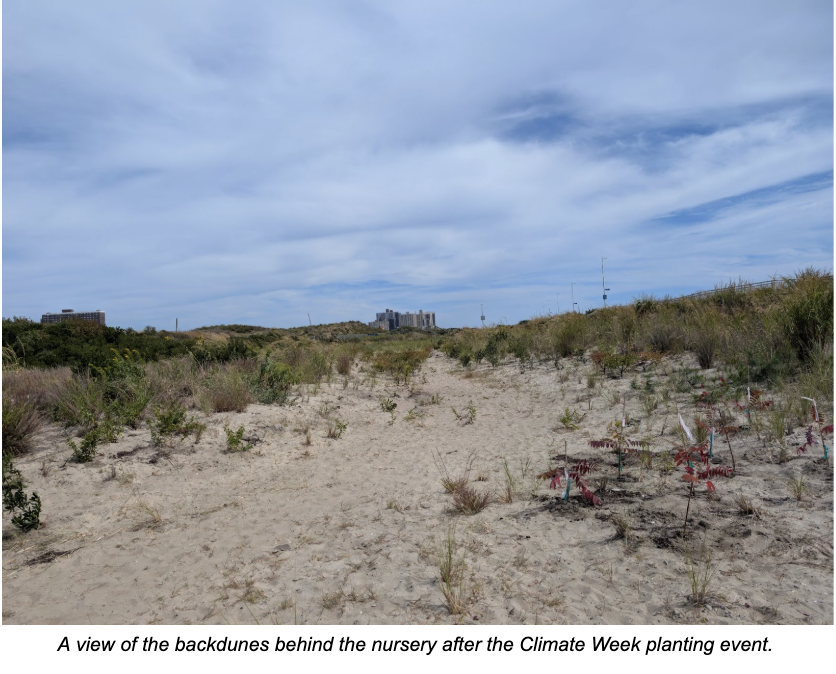
The crowd has been carefully instructed. Determined visitors walk through an open gate onto the sand before they disperse, shovels in hand, shoes slipping against the unstable ground. They quickly set to work, spacing out plants, digging holes, and loosening roots. Others carry water pails from watered sands, waiting eagerly for a refill. In just a few hours, the land is transformed: winged sumacs burst from the ground with vibrant red fruits; eastern red cedars and northern bayberries stand tall, towering over spiny clumps of Carolina rose; Virginia creepers crawl along the sand, reaching out for the dark bark of planted beach plums; the barren space becomes a field of early falltime reds and greens.
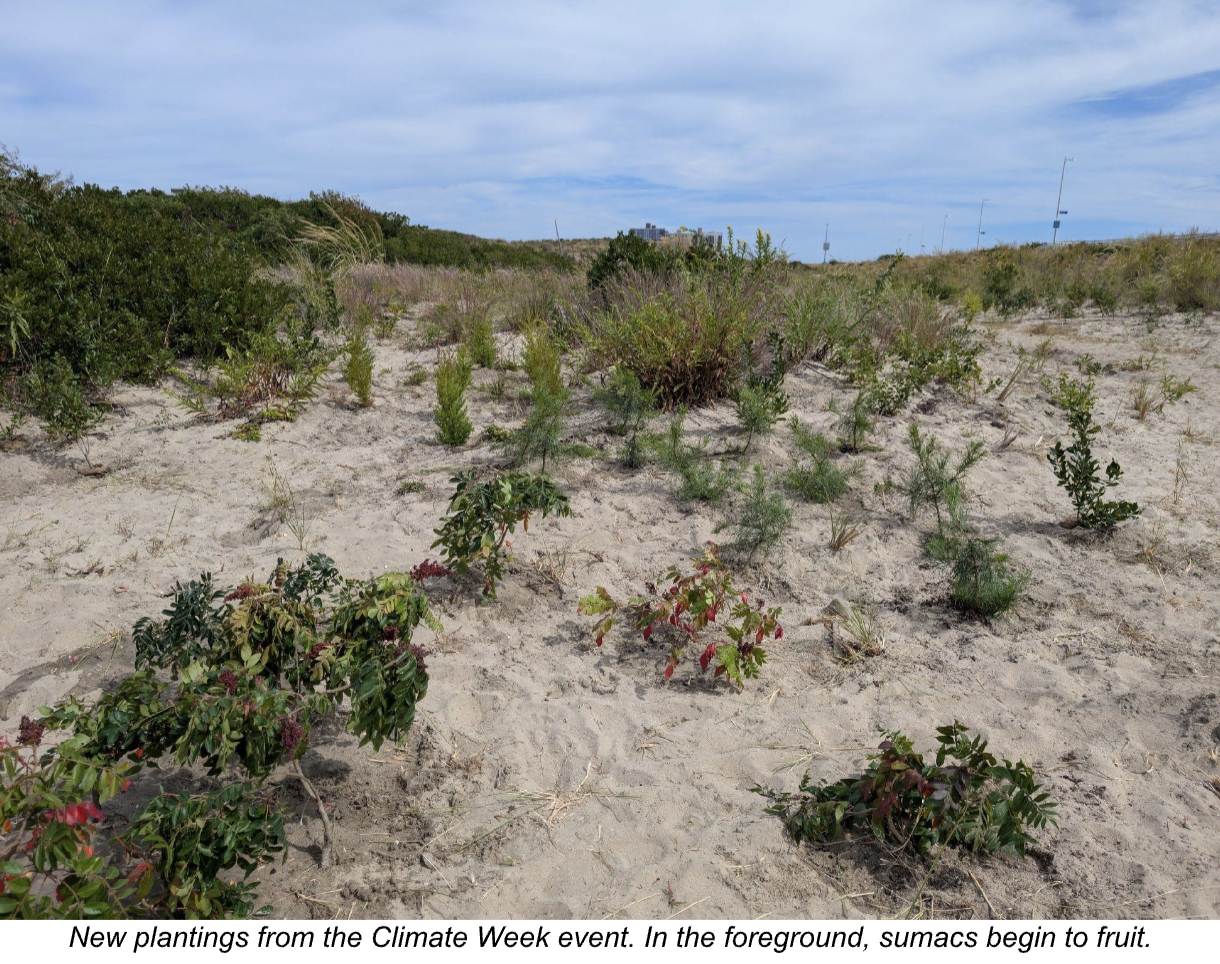
This planting event is just one of many held by the Rockaway Initiative for Sustainability and Equity (RISE). Founded in 2005 by Jeanne DuPont, the organization builds connections between residents of the Rockaways and local ecosystems through various community initiatives. Many students participate in their Environmentor and Shore Corps programs, learning about and partaking in environmental research and civic engagement projects. This event, however, was spearheaded by a different team, one that was established as part of the organization’s latest venture.
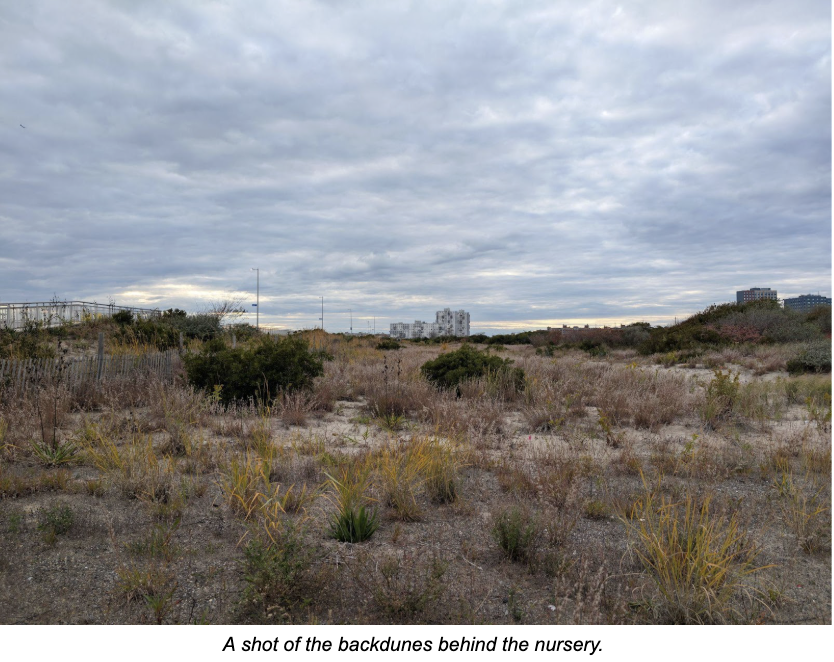
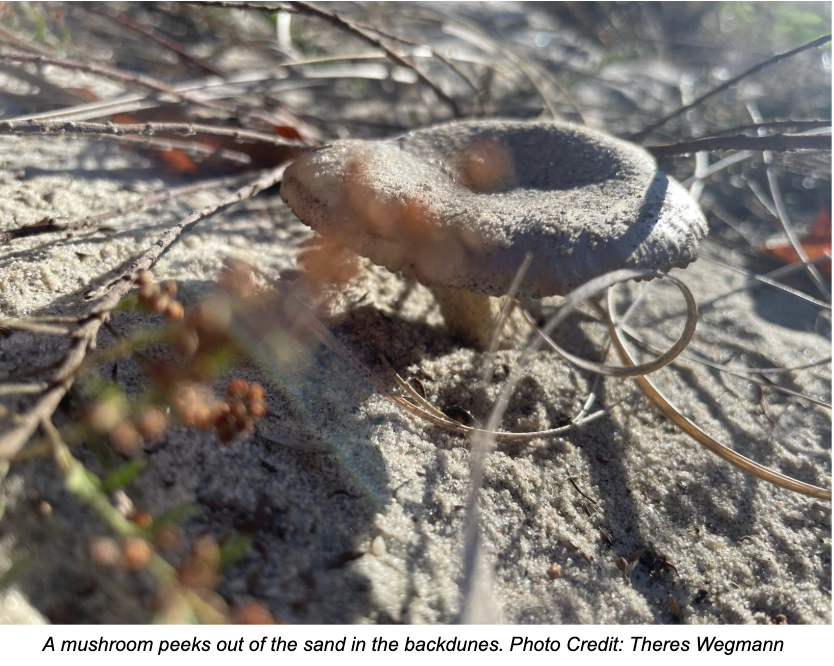
While RISE has a long history of conducting beach cleanups and dune plantings, the organization’s creation of the Dune Squad in 2023 expanded its restoration and maintenance efforts. The Dune Squad performs extensive weeding activities, preparing planting spaces for months in anticipation of native plantings. Finally, during the spring and fall, the group begins to plant, selecting native species naturally suited to life in the dunes. While one may imagine the foredune (a planted, sandy region usually fenced off from the beach below and the boardwalk beside it) as the Dune Squad’s working space, the group actually operates in the backdunes of Rockaway’s beaches. The backdunes are located past the boardwalk, further inland from the beach. Both the foredunes and backdunes are important ecosystems for the species that call Rockaway home (including the people!). Dunes reduce the impacts of flooding and limit beach erosion, keeping Rockaway’s beaches intact while reducing flood threats. The Dune Squad’s efforts to remove invasive species and introduce native plants throughout the backdunes will help strengthen the region, supporting native birds and bugs alike.
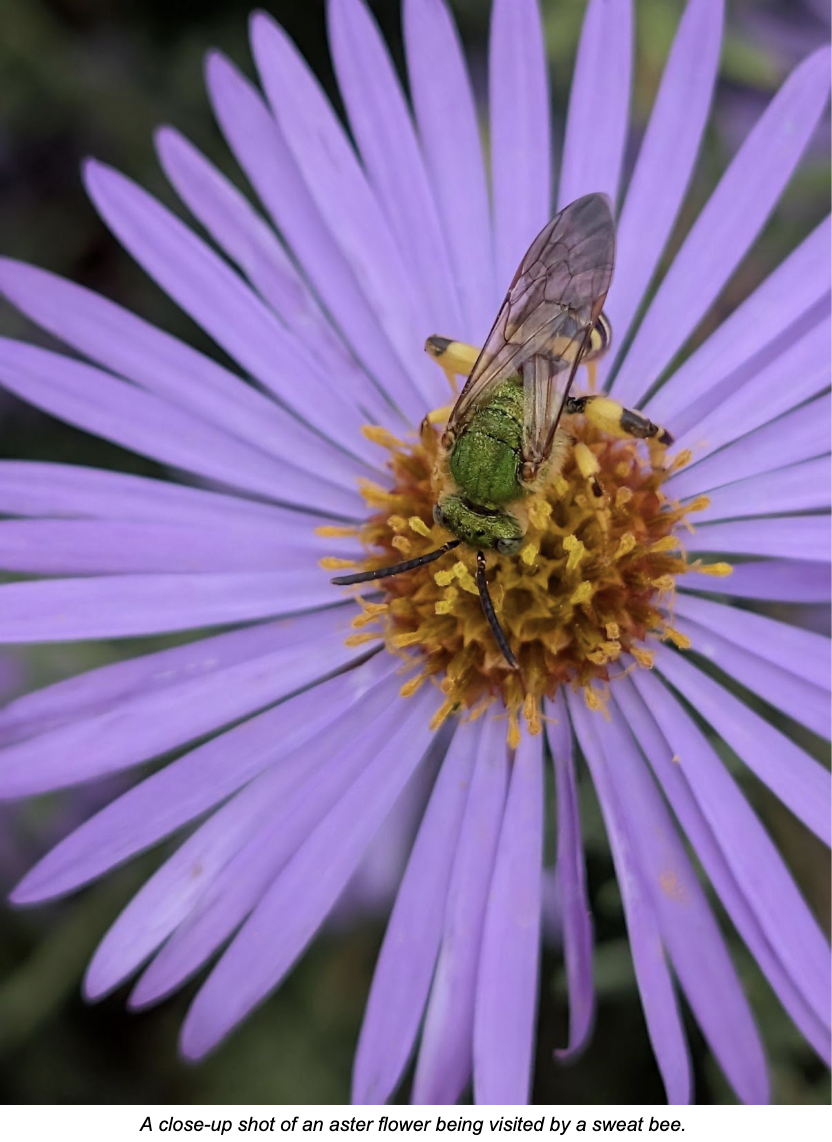
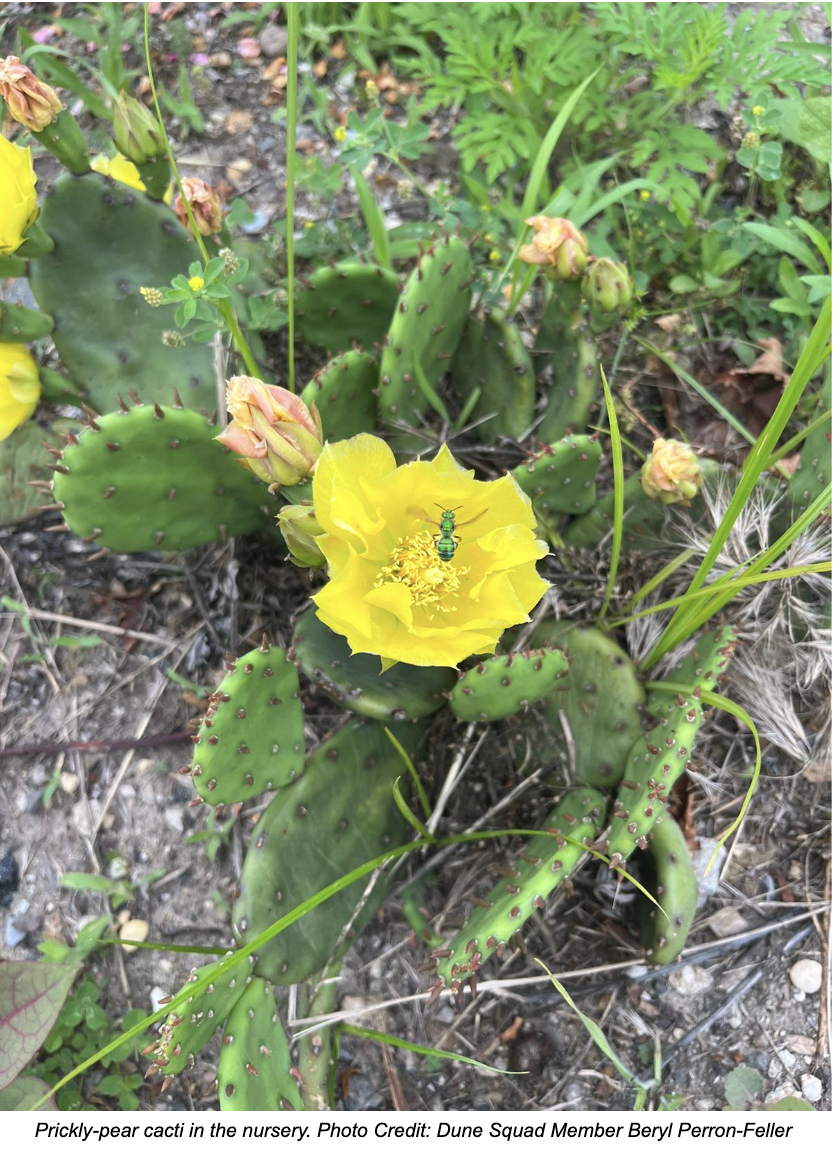
RISE’s focus on rebuilding native habitat extends beyond invasive species management. In 2024, the RISE Native Plant Nursery and Educational Garden was established. Once the location of beachside bungalows and roads (and later, illegal dumping grounds), this site is now a sprawling native garden. The land has been altered many times, impacted by cycles of razing and development. Now, stands of various species of asters and milkweeds, northern seaside goldenrod, eastern prickly pear cacti, and Virginia creepers are framed by pitch pines and fruiting bayberries. Behind the nursery’s gates, the Dune Squad prepares for future planting seasons, building seedbanks and readying plants for the winter. Alexandra Williams, a member of the group, recalls carefully separating seedheads from graying asters. “You want to harvest as little plant material, besides seeds, as possible,” she explains. She has experimented with various methods of seed collection, including removing seedheads, and, noting how aster seeds disperse via wind, pulling out clumps of tufted seeds. The team is working on different methods of seed collection and storage, taking inspiration from other gardens and nurseries to find the best methods for next season’s seeds. Throughout the fall, they will hold and maintain several more plantings, filling in other portions of the backdunes with a variety of native species. As the weather grows colder, the team has also conducted plant surveys, setting up quadrats and measuring tapes to monitor plant growth and species composition in the backdunes.
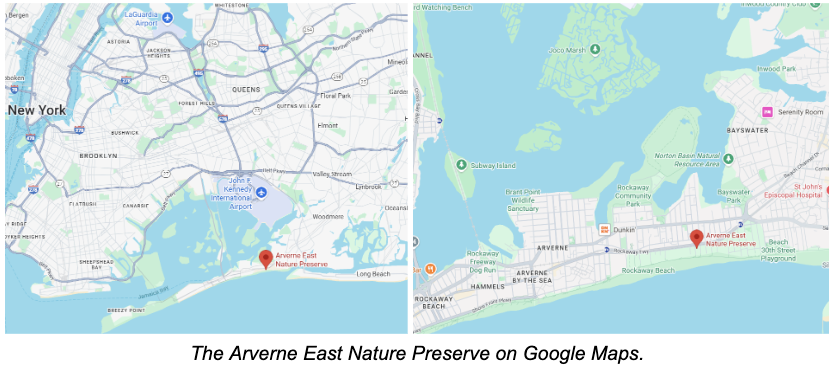
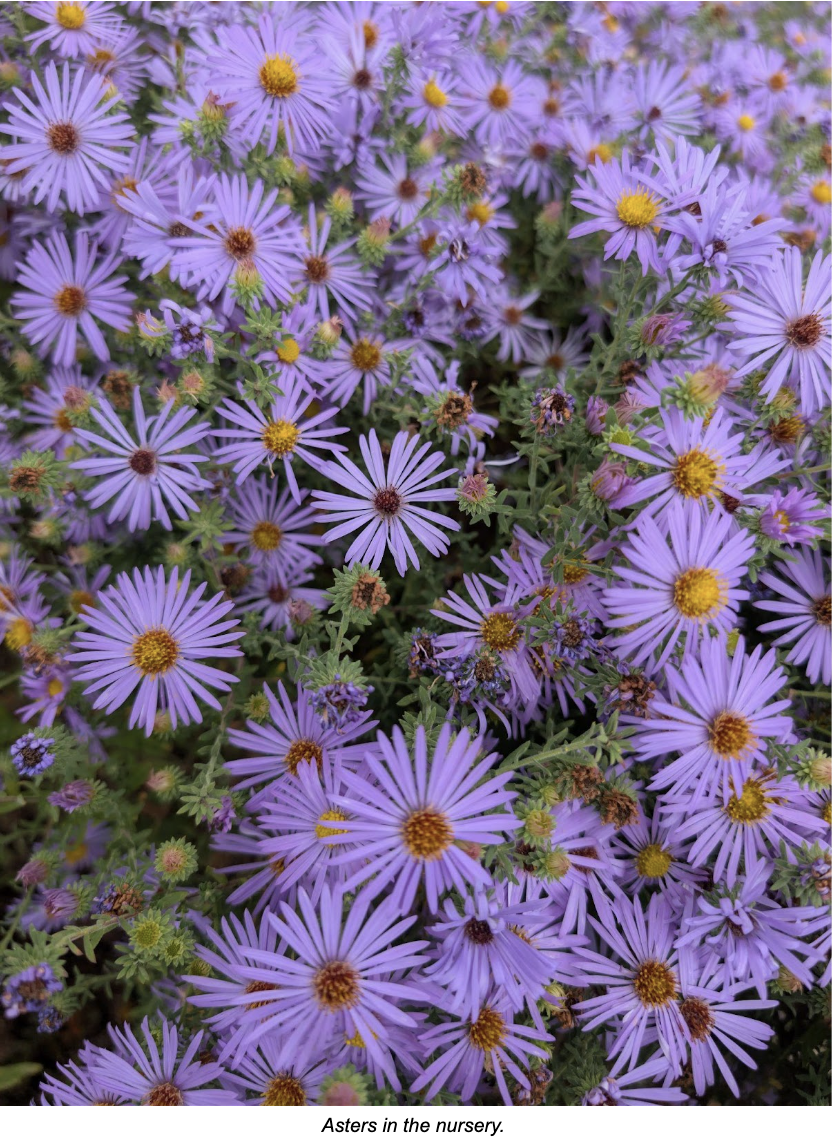
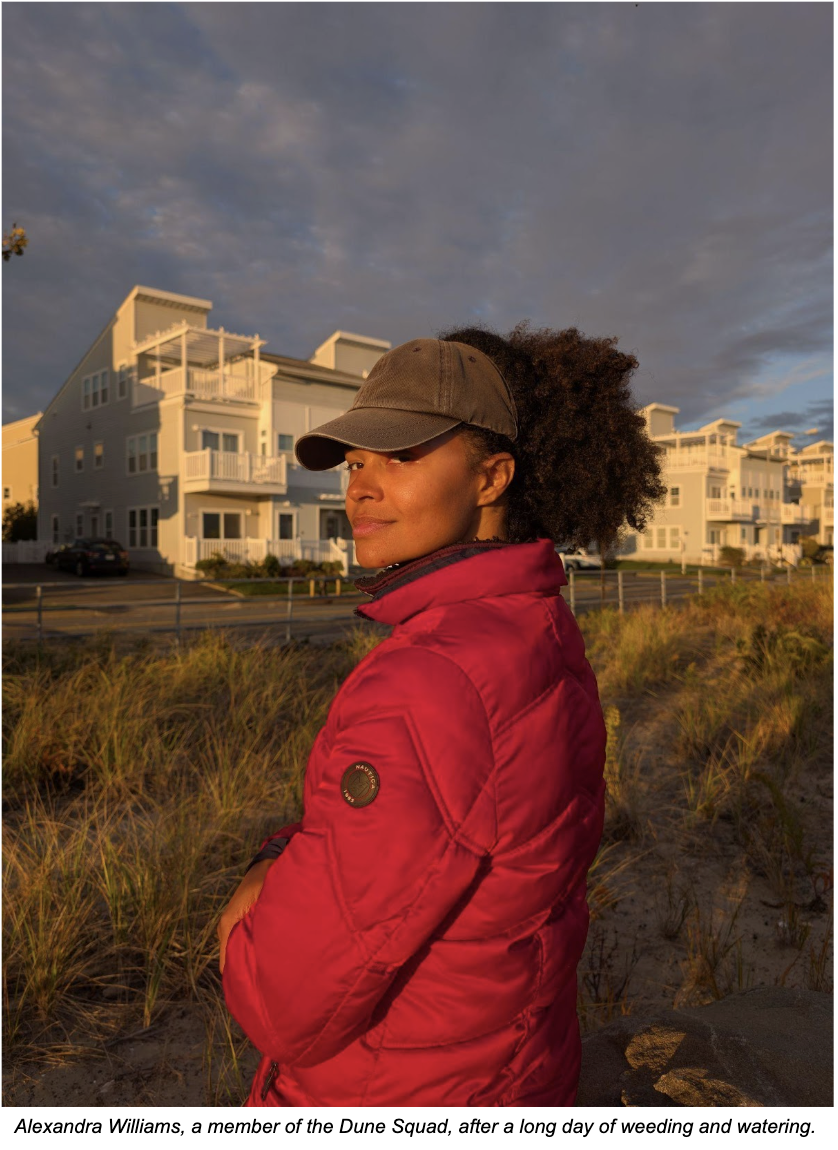
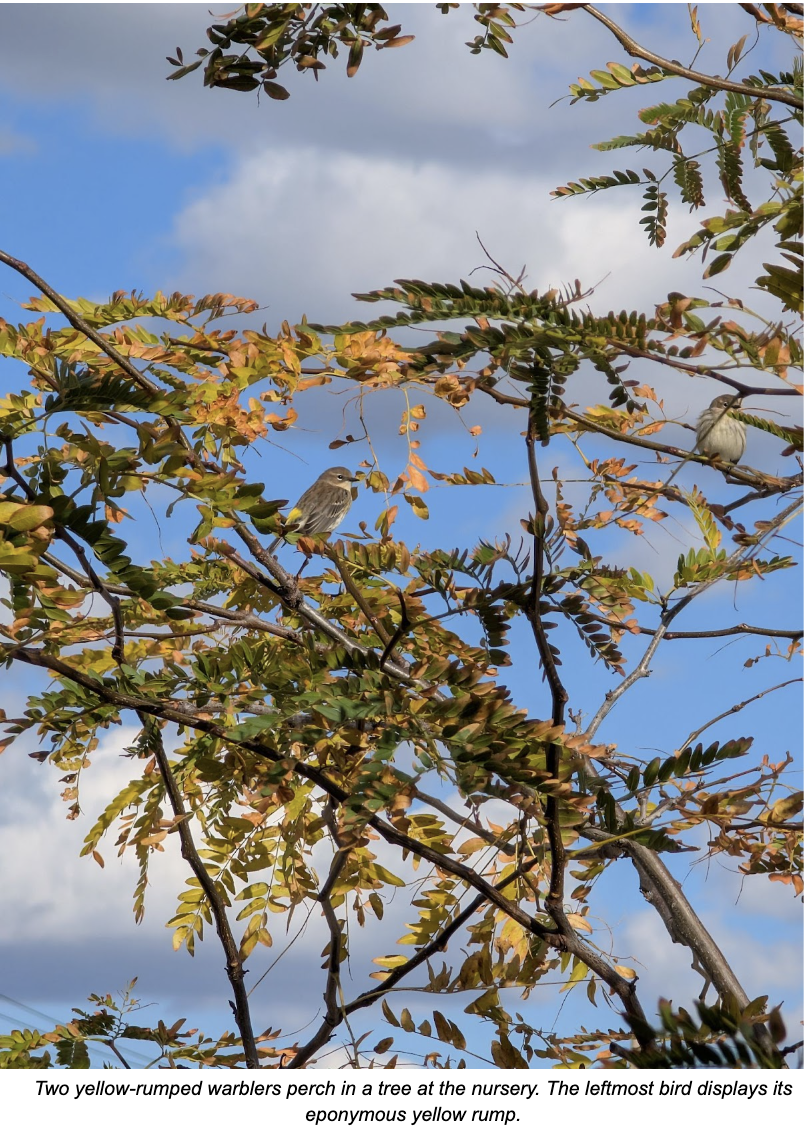
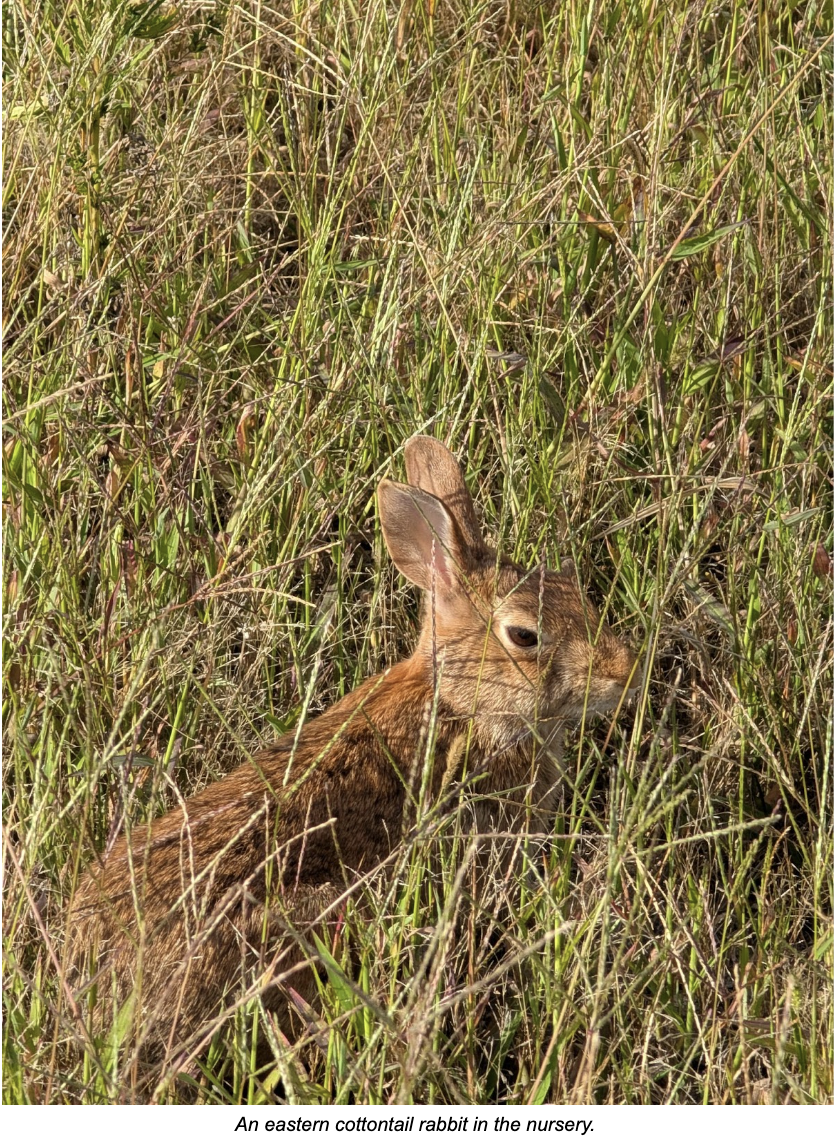
The Dune Squad’s restoration work has greatly benefited local ecosystems. According to Williams, "[w]e’ve seen a greater effect on biodiversity… Different bird species raise their young here, and rabbits and even turtles have been sighted around the dunes and nursery.” The nursery itself has seen not only nesting kildeer and doves, but also an influx of migrating birds, including eastern phoebes, tree swallows, and yellow-rumped and palm warblers. Other visitors, such as a lone bald eagle soaring overhead, have also drawn surprise and awe from their captivated audience. Williams explains that because the nursery is “an area where there is still high foot traffic, you can see how having a biodiverse urban environment is sustainable.” Walking past the nursery’s tall goldenrods and shrubby aromatic asters, it is almost a wonder that just a few years ago, the area was a largely empty space, scarred by roads and scattered with debris.
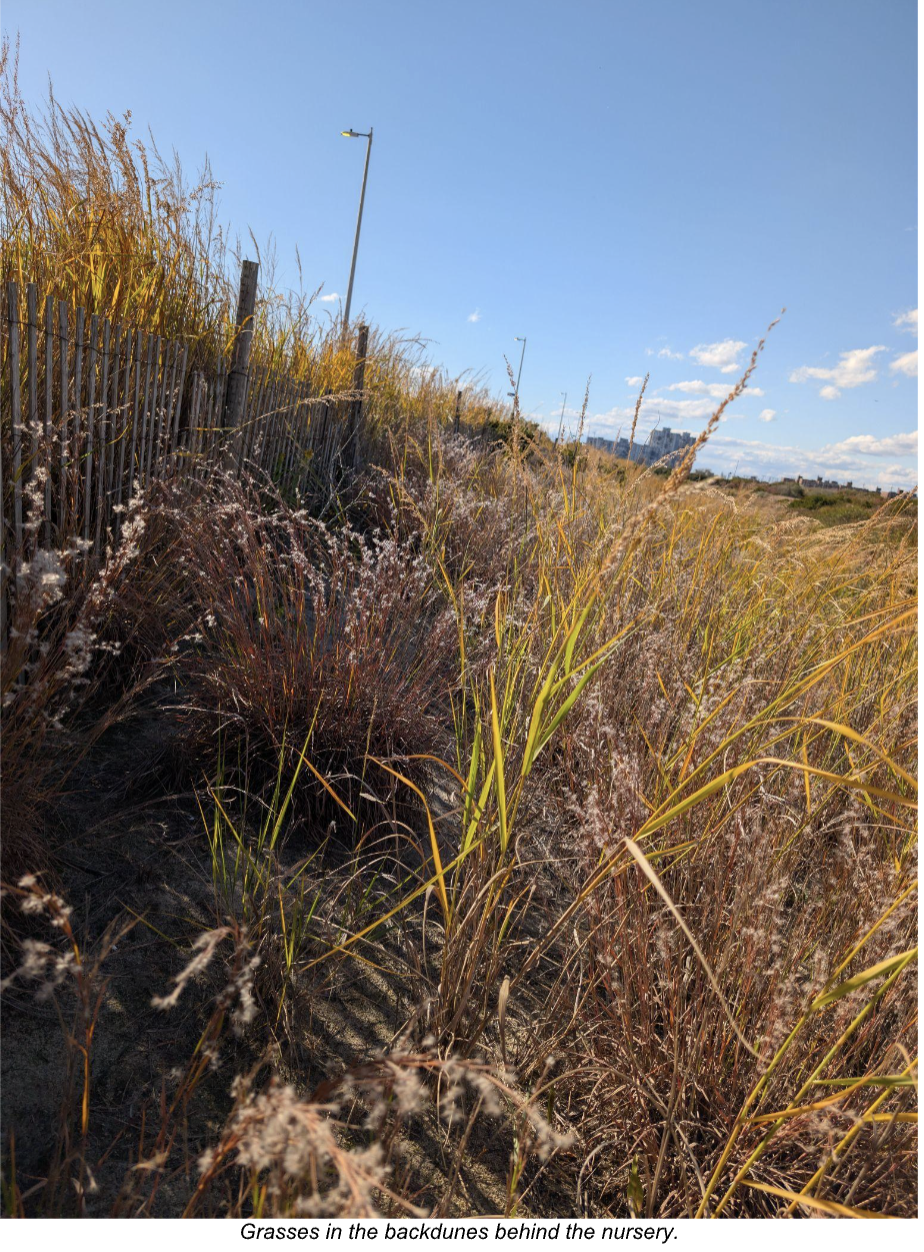
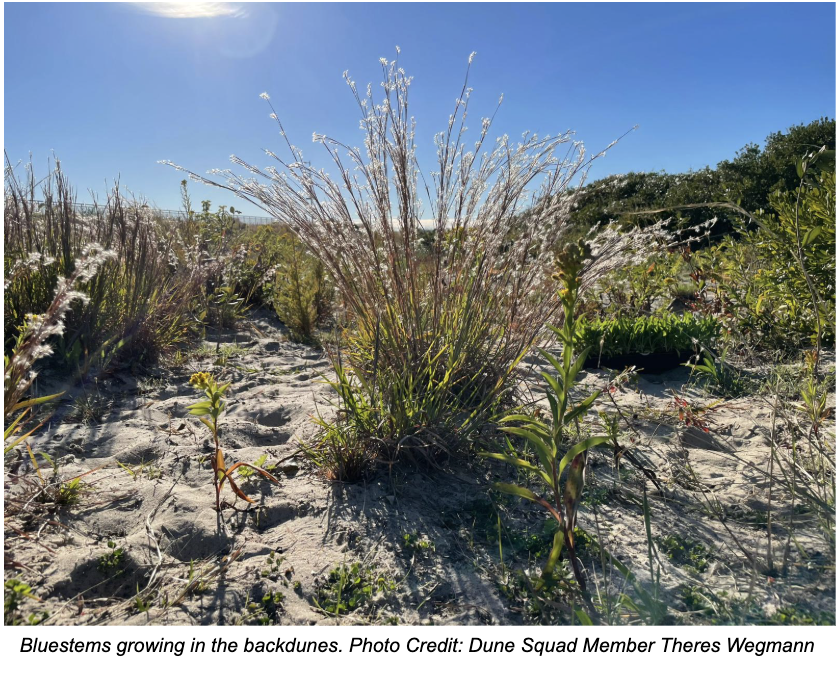
As she pulls up clumps of black medic from the sand, Dune Squad member Katherine Coates reflects on the impact of human development on the landscape: “We are still in a rigorous cycle of overdevelopment… If you think about this land area, before they razed it, it used to be all old growth; old bayberries, crabapple trees, a lot of older trees… There were lots more birds out here before they razed the land again, but it seems like they’re coming back.” Over one hundred former visitors and residents familiar with the bungalows of the past have reminisced about times (and landscapes) long gone on The Bungalows of Rockaway (the website for a documentary of the same name), recalling vivid childhood memories, beautiful yards, and idyllic days by the beach. Setting down not only lines of beachgrass, clumps of switchgrass, purple lovegrass, and little bluestem, the Dune Squad also reintroduces shrubs and trees to a space that has dearly missed them: small bayberries, sumacs, and pines now rest in the sand, eager to follow in the footsteps of their predecessors.
The Dune Squad’s efforts are only made possible through collaboration with community organizations and government agencies. Their Climate Week planting event, for example, was held in collaboration with the Surfrider Foundation, a group determined to protect the world’s oceans. The Dune Squad’s efforts are also guided by the “Greater Rockaway” Coastal Resilience Plan, created by RISE and supported by various government agencies and private firms, including the NYC Department of Parks and Recreation, the New York State Department of Environmental Conservation, the National Fish & Wildlife Foundation, the U.S. Army Corps of Engineers, WXY Architecture, and eDesign Dynamics. The plan aims to restore and maintain dunes across the Rockaways, spanning from Beach 17th through Beach 76th Street. This region was hit particularly hard by Hurricane Sandy in 2012, and efforts to rebuild the dunes stand not only as a shift towards more responsible urban design practices, but also as an attempt to build resilience and create a Rockaway that can handle the impacts of the next “100-year storm.” Coates acknowledges the Dune Squad’s work is just the start, explaining that “[e]ven if it is somewhat performative, I think that the concept is true... This is the beginning of the first steps of the project… In one hundred years, people will see what we’ve done right and can build a basis of knowledge.” Looking to the future, the group aims to foster biodiversity and resilience in a coastal community with a unique history characterized by both development and destruction.
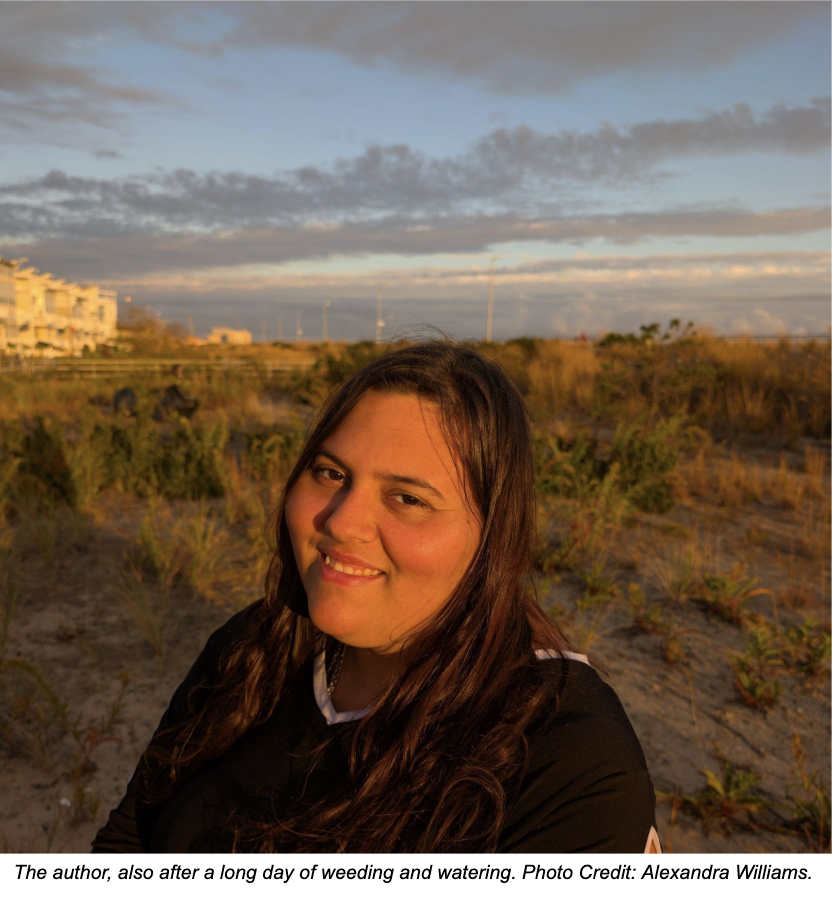
As a former Environmentor and Shore Corps participant, I have seen the impacts of RISE’s work firsthand: the organization has sown the seeds for generations of community-based climate action. An increased awareness of climate change, a newfound appreciation for Jamaica Bay and Rockaway’s dunes, and a greater sense of community have prepared me, other students, and the area’s residents for a future that will be plagued by the impacts of climate change, and yet empowered by collective action. Now, as a member of the Dune Squad, I hope to contribute to even greater change for the future.
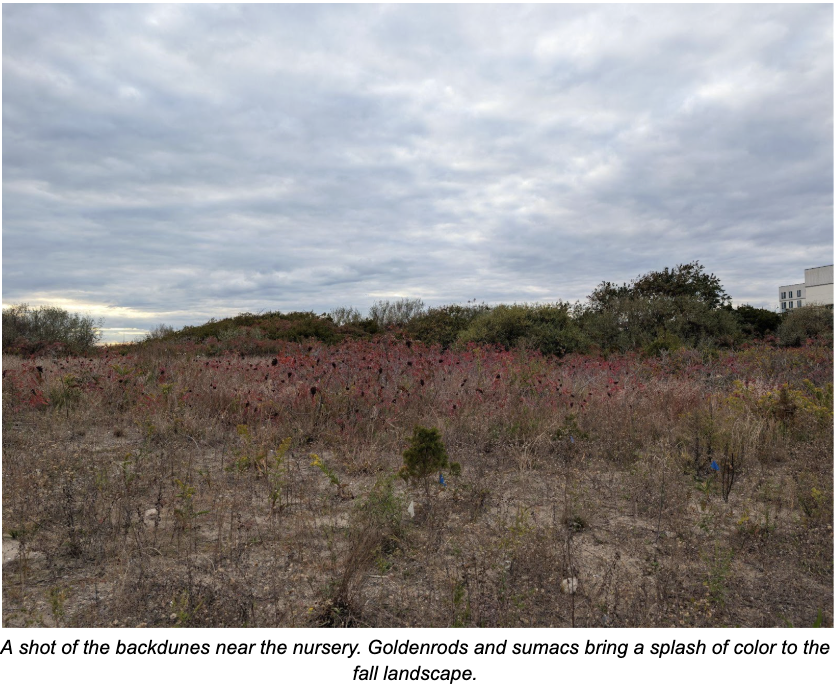
Looking over the sumacs and creepers, their leaves a vivid red, strikes me with a sense of bittersweet hope. Over the past few weeks, I worked to clear the invasive species from this very spot, watched as volunteers planted with glee, and helped replant and maintain the plants after the event. Now, the nights come sooner, and the breeze bites a little more with each day. And yet, as I look out across the massive winged sumacs, sturdy bayberries, and lingering pitch pines, I have a feeling that the new guys will do just fine.
--
FIELD GUIDE: PLANTS IN THIS ARTICLE!
|
Plant Name |
Description |
Picture |
|
Winged Sumac (Rhus copallinum) |
A native tree that has pinnately compound leaves that look like feathers. While they are usually green, leaves become bright red-purple in the fall. Also known for having bunches of small red fruits. |
 |
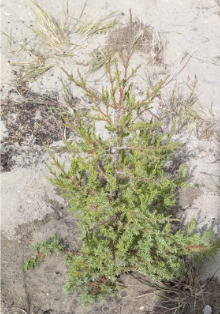
Eastern Red Cedar (Juniperus virginiana) |
A native evergreen tree that can grow up to 90 feet! Salt-tolerant, aromatic, and blue-green in color. |
 |
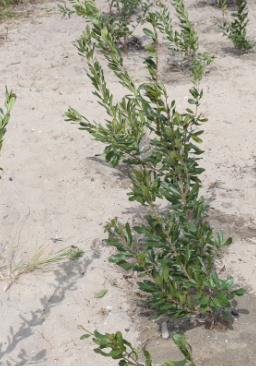
Northern Bayberry (Myrica pensylvanica) |
A native shrub with glossy green leaves and waxy, whitish fruits. |
 |
Carolina Rose (Rosa carolina) |
A native rose shrub with vivid pink flowers and thorns. |
|
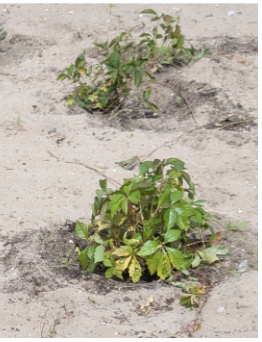
Virginia Creeper (Parthenocissus quinquefolia) |
A native vine with leaves that have five toothed sections (leaflets). During the fall, leaves change from green to vivid red. Grows dark blue berries. |
 |
Beach Plum (Prunus maritima) |
A native shrub growing 3-6 feet tall. As indicated by the name, its white flowers produce small plums. |
|
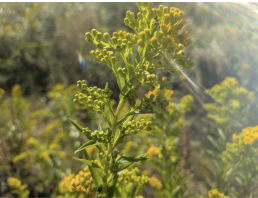
Northern Seaside Goldenrod (Solidago sempervirens) |
A native perennial that grows 2-6 feet tall. Bunches of golden yellow flowers are found along the tops of stalks. |
 |
Eastern Prickly Pear (Opuntia humifusa) |
A native cactus with spiny pads and bright yellow flowers. These plants contain an antifreeze chemical that prevents them from freezing during the cold New York winter! |
|
|
Pitch Pine (Pinus rigida) |
These native trees can grow to over 70 feet tall! These trees have stiff cones and rigid, sharp needles, which sometimes grow directly on their trunks. These trees are hardy and sometimes used for lumber. |
|
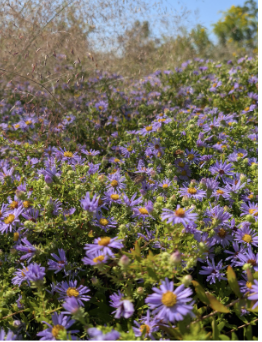
Asters (Symphyotrichum) |
Most species in this genus are native to North America! Their often colorful flowers tend to bloom later than others, with some appearing in late fall. Some asters, such as aromatic asters, grow like a bush, with several stems branching out from its center. These many stems continue to branch off and are capped with blue-purple flowers. |
 |
Milkweed (Asclepias) |
These native plants are famous host plants for monarch butterflies. Different species have different characteristics, but many have long, thin leaves and clusters of brightly-colored flowers. Many species also release a milky white sap (earning them their name). Milkweeds are toxic, so keep them away from pets! |
|
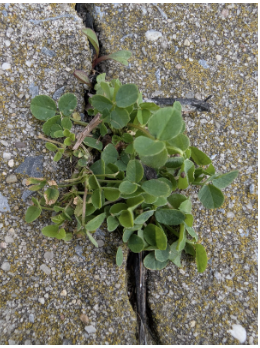
Black Medic (Medicago lupulina) |
These non-native plants have clover-like leaves (earning them an alternate name of black clover) and a deep taproot. While small, they can grow and spread rapidly! |
 |
American Beachgrass (Ammophila breviligulata) |
This native grass can grow several feet tall and is known for its wide-spreading rhizomes. Its beige seedheads sway in the wind and hang over shorter dune plants. They are essential for dune structure, as their rhizomes grow deep and spread wide, helping to keep sediment in place. |
Photo Credit: Long Island Natives |
Switchgrass (Panicum virgatum) |
This grass is commonly found in prairie ecosystems. Leaves are thin and have a slight curl, and seedheads appear lacy. |
Photo credit: Pinelands Nursery & Supply |
Purple Lovegrass (Eragrostis spectabilis) |
This native grass produces unique, hazy-looking red-purple arrays of flowers. |
|
Little Bluestem (Schizachyrium scoparium) |
This grass grows in thick clumps, reaching 1.5-2 feet tall. While normally a blue-green color, their color changes to red as the weather cools. Tufted white seeds contrast with their fall coloration. |
|
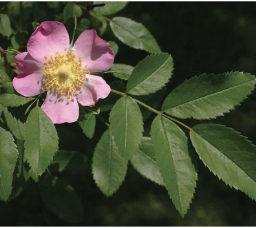 Photo Credit:
 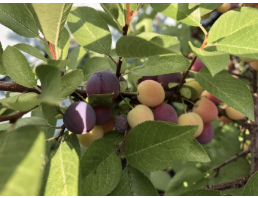 Photo Credit:
 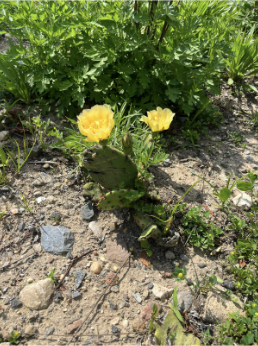 Photo Credit: Beryl Perron-Feller
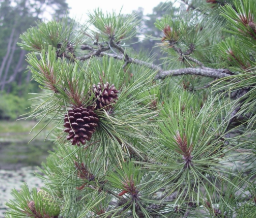 Photo Credit:
 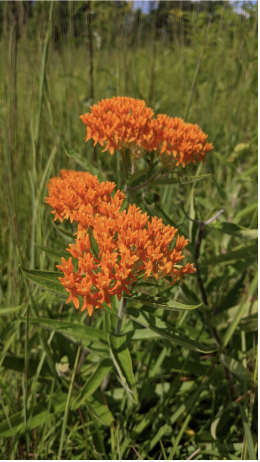 Butterfly milkweed (Asclepias tuberosa). Photo Credit: New Jersey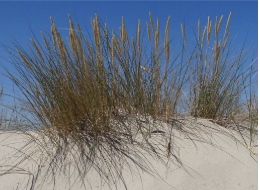
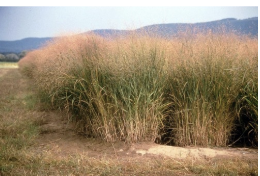
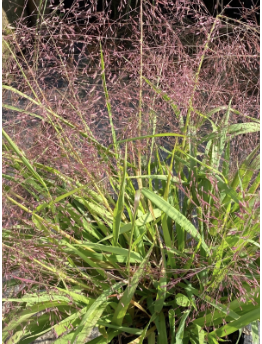 Photo Credit:
 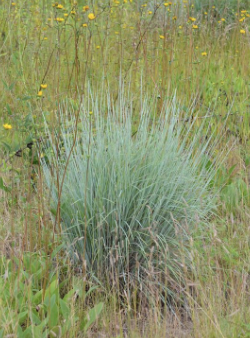 Photo Credit: