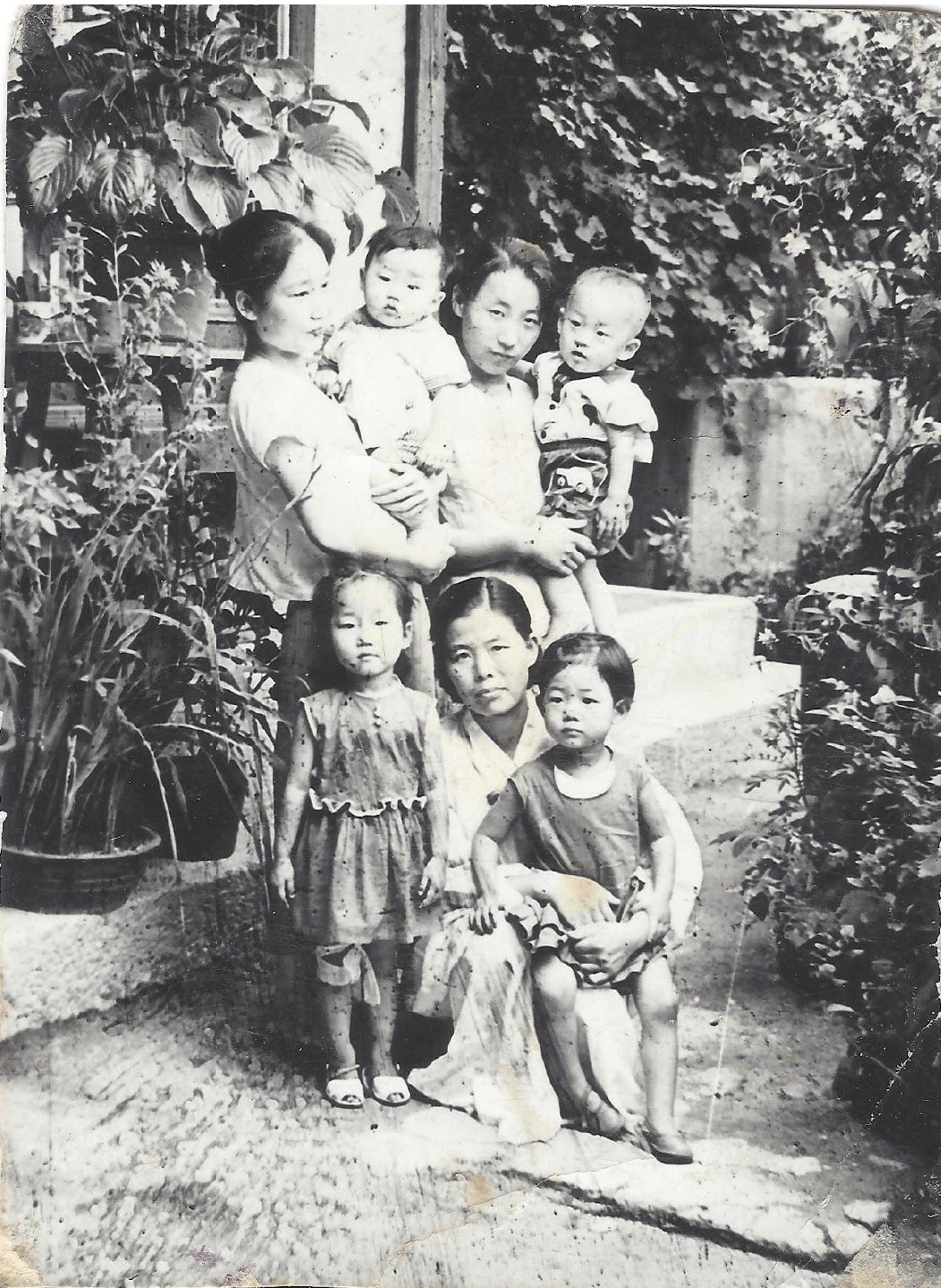
 When I think about who I am in every chapter of my life, there is one person who is always a beacon in my orbit. One person who I think about who shaped me in a significant way while alive. Presently, the one person I ask for guidance in my prayers. My grandmother, Park Taesoo, was born in colonized Korea in 1923. It was a time when Korean people were being assimilated into Japanese culture, their national identities stripped and replaced, and any form of dissent was targeted, questioned, and often met with brute violence under militant Japanese forces.
When my grandmother was a teenager, women and children were being kidnapped and sold into sexual slavery by the imperial Japanese army. They were often coerced and lied to, being promised fruitful jobs when they were actually being forced into sex work. Others were simply taken from their homes, with many families coming back only to find their daughters, sisters, or wives missing. The conditions were atrocious, unhealthy, and inhumane. The women and children who were euphemistically called “comfort women” were raped and beaten dozens of times daily, working in unsanitary conditions to satisfy the Japanese military. They were left physically and psychologically traumatized and often suffered from venereal and infectious diseases. Many were left infertile as a direct result from the assaults they endured. The documentation of these appalling acts have since then been destroyed and the surviving women have lived for many years in silence without proper recourse from the Japanese government.
My grandmother’s family arranged a marriage for her at a young age in order to protect her from being taken into sex slavery. Although it was not always the case, families often thought that if a young girl was married, she held a better chance of being “left alone.” So, my grandmother married my grandfather and had four children: My two uncles, my mother, and one aunt who sadly fell to pneumonia as a child.
My grandparents lived in Seoul and aside from raising her children, my grandmother often worked several jobs to help feed her kids. From working at a telephone store to selling the robin’s eggs from her front yard, she did everything in her power to ensure her family did not starve. It was a time when Korea was poor, war-torn, undeveloped. My grandfather was a local school teacher who taught Korean history and literature and made a small salary. Because of the country’s fragile state, Koreans were extremely vulnerable and lived simply in order to survive another day.
Before my mother was born, my grandfather was forcefully taken to be questioned by the Japanese military during the middle of his class. When news reached my grandmother, she collected the two most precious things she had, her son and her 50-pound Juki sewing machine, left everything else behind, and began her journey to find her husband.
This happened in late 1940s Korea. Dirt roads, cities far from paved. The land of morning calm in its hungriest and most precarious state. My grandmother faced miles of uncertainty before her, [and] I can only imagine how scared she must have felt. With my second unborn uncle in her belly, one hand holding her son, and the other her sewing machine, she walked countless miles passing what is now the “DMZ” - Demilitarized zone - and waded through the Han River, to what is now Pyeongyang, North Korea, to find her husband. I often wonder how she managed to do this, her only asset being her grit. But it was because she had no other choice: being a single mother was unfathomable in her time. She and her children simply would not survive.
My grandmother eventually found my grandfather at a detention center and got him out. I asked my mom how she did it and even she does not quite know how it happened. But because of this, my grandparents and uncles returned to Seoul and a few years later my mother was born.
When I am going through some of the hardest times of my life I think about my grandmother. I picture her with my young uncle and her sewing machine in hand. I feel her unrelenting grit and strength. I feel her courage.
As I navigate my present life, my grandmother’s guidance feels more palpable than ever. As a single mom traversing challenges I never imagined, I think about what she might tell me if she were still here. I think about her crossing the Han river with a pregnant belly. I think about the suffering she endured in her marriage even after she brought back her husband from the north. I think about her ability to remain a joyful and caring person despite the unfair hand she was dealt in life.
My grandmother immigrated to the U.S. when I was born. It wasn’t until I was older that I realized her identity beyond being my grandmother. She was not just a survivor, she was a pioneer. At age 70 she learned English and passed her U.S. citizenship test. She was really proud of this achievement. She once told me that if she was born in another time, she would have never married but would have gone to school for as long as possible. She was passionate about educating herself. One of the fondest memories I have with my grandmother was when she came to my undergraduate ceremony at UCLA. I remember hearing her cheering and clanging pots and pans in the crowd when they called my name. I took a picture of her in my cap and gown to show that this was hers, too.
I think about some of the challenges we face today as women and see the parallels of how things once were. My grandmother’s intersectionality as a Korean woman living in a Japanese colonized country prevented opportunities she would have otherwise thrived in. She was held back from education, financial independence, and a life beyond being a wife and mother because of her identity. The issue remains that we still live in a patriarchy that cages and holds impossible standards for women.
My purpose is to continue her legacy. My grandmother's invaluable worth should never have been questioned and her survival should never have had to be the underlying character of her existence. We have been through enough oppression as mothers, as wives, as women, as girls. My hope is to bring my self-awareness and positionality to decolonize the stigma surrounding the negative social construct we have endured as women, and to move the needle in my own way in order to allow girls and women to heal and thrive rather than just to survive.